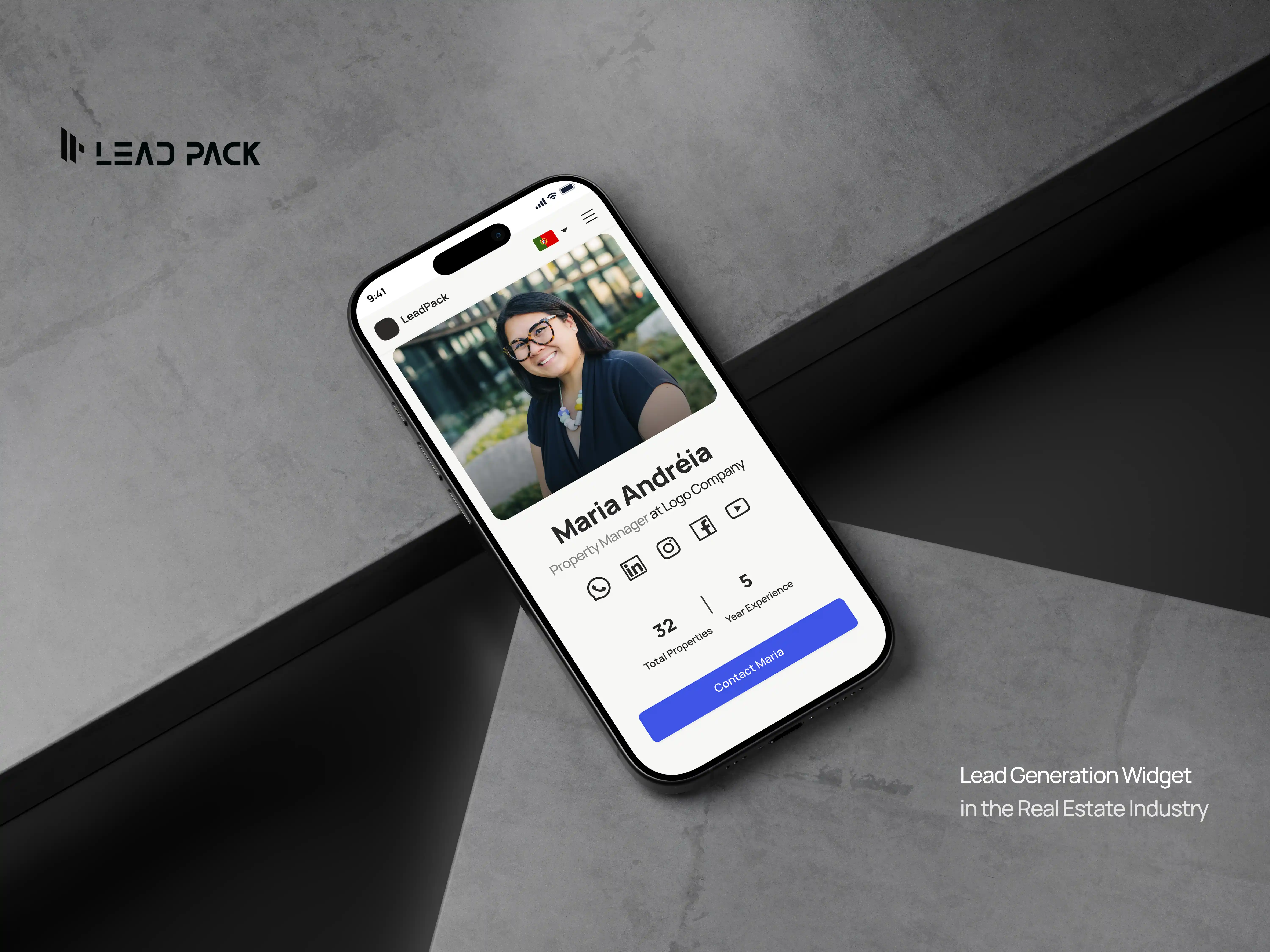
About LeadPack
In Portugal, most real estate agencies display their available properties as posters on their shop windows, and generally generate a very low number of leads from their websites. This is where LeadPack comes in. By placing a QR code on the same property introduction poster, we invite people to read more information about the property and ultimately contact the agent.
Understanding the Problem
Maximizing Website Lead Generation for Real Estate Agents
Many real estate agents are missing out on a major opportunity to convert their website traffic into qualified leads. The main reason? A lack of effective lead-generation systems and physical retargeting strategies that connect online and offline interactions.
The Problem
1. Ineffective Lead Generation
Over 54% of real estate agents receive zero leads from their own websites, and only 2% generate more than 100 leads per year. This highlights a critical issue: the primary digital asset agents own, their website, is often failing to function as an effective marketing and sales channel.
2. Underused Content Marketing
Just 9% of agents maintain a blog, revealing a massive missed opportunity to attract, engage, and convert potential clients through valuable, SEO-driven content.
3. The Physical Retargeting Gap
Most agents lack tools to retarget or follow up with prospects who engage with their listings in the real world—whether through print ads, open houses, or outdoor signage. This “offline-to-online” disconnect leaves a powerful, low-cost marketing channel underutilized and limits agents’ ability to re-engage high-intent prospects with personalized offers.
The Impact
Without the ability to effectively capture and nurture leads, agents are:
Wasting marketing budgets on channels that don’t convert.
Losing sales opportunities to competitors who follow up smarter and faster.
Becoming overly dependent on third-party lead platforms instead of building their own predictable, sustainable lead funnels.
What I Did
As the Solo Product Designer and UX/UI Researcher for the Lead Pack project, my key responsibilities included:
• User Research: Conduct interviews and usability testing to uncover essential user needs and behaviors, directly identifying and quantifying pain points.
• Design Development: Grounding design concepts in user research and business requirements, I delivered high-fidelity prototypes, wireframes, and interactive mockups that effectively translated strategic vision into tangible, user-centric solutions.
• Design System: Drove design consistency, efficiency, and scalability by establishing and rigorously maintaining a comprehensive design system.
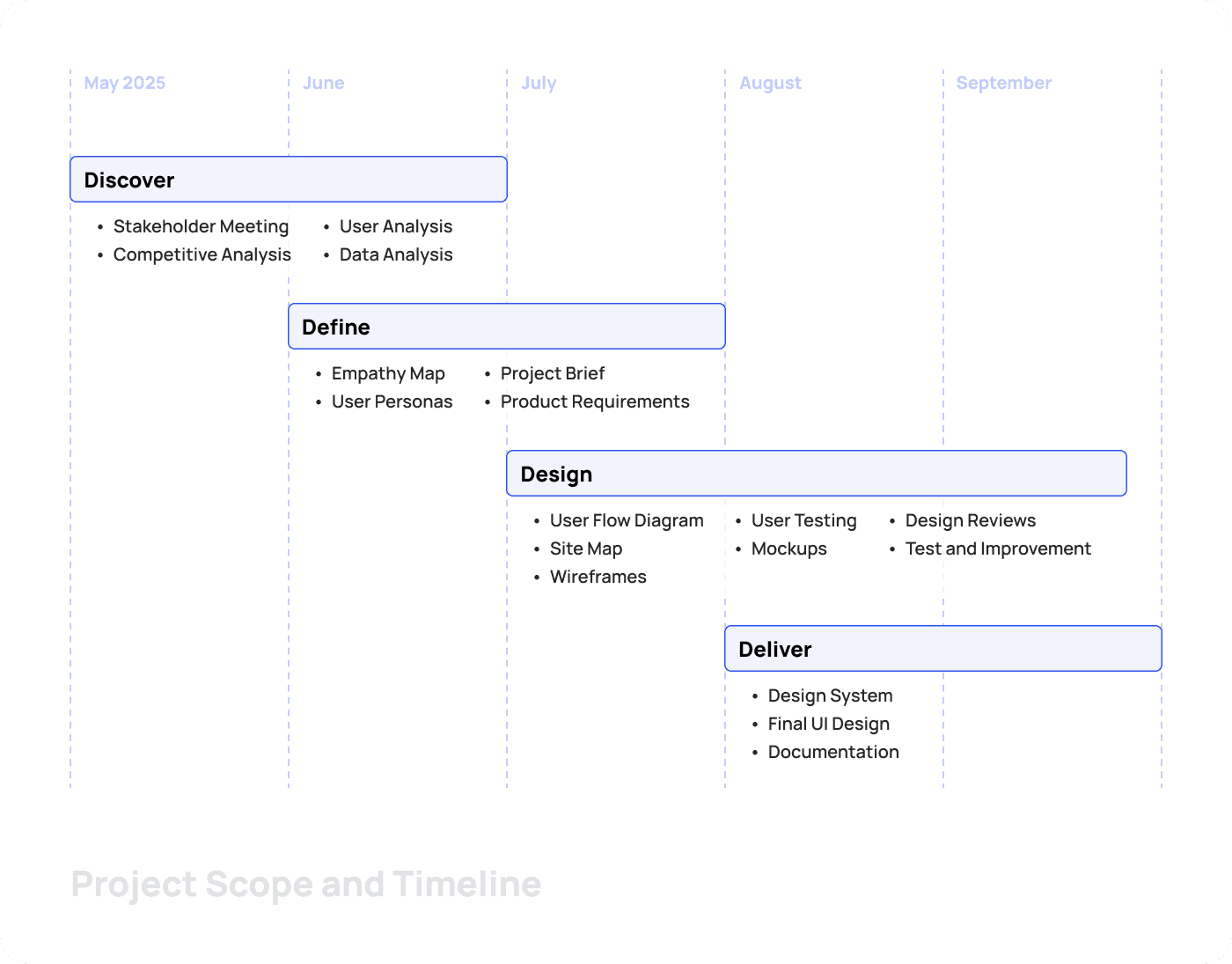
Project Timeline
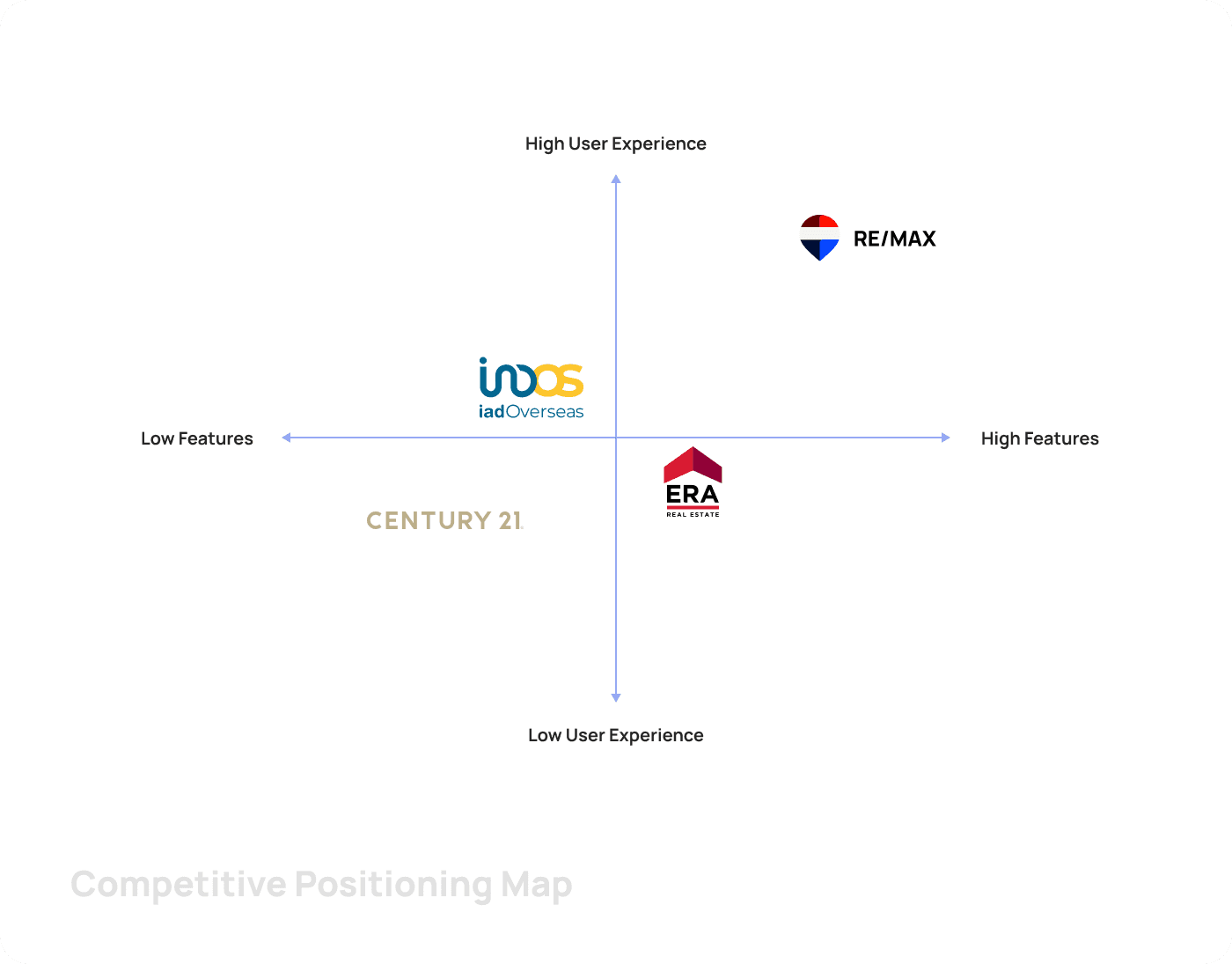
Competitive Analysis
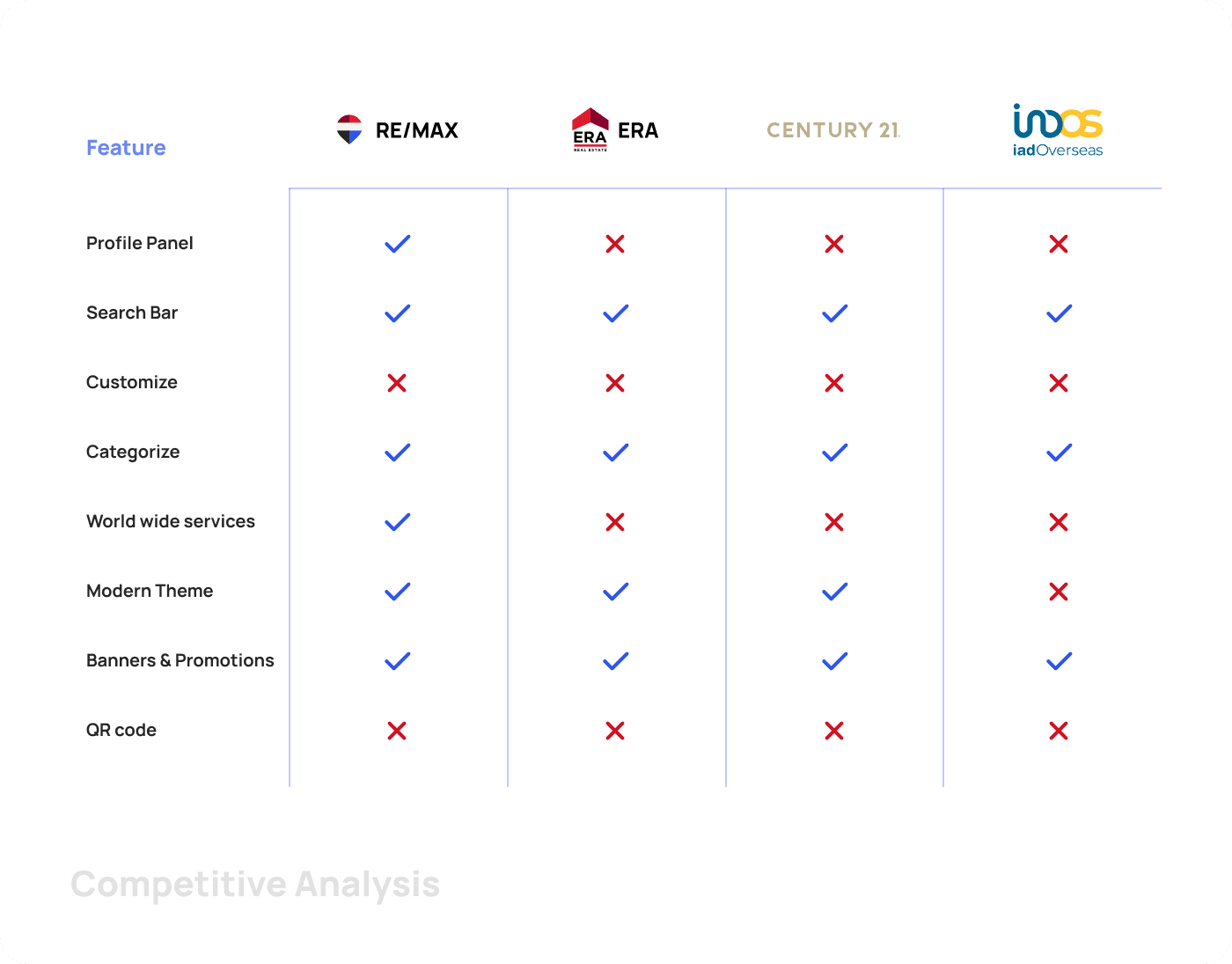
This competitive analysis evaluates the features offered by LeadPack's main domestic and international competitors. The goal is to identify key strengths, gaps, and opportunities that will inform the design of LeadPack and ensure it ranks highest in the market.
User Analysis
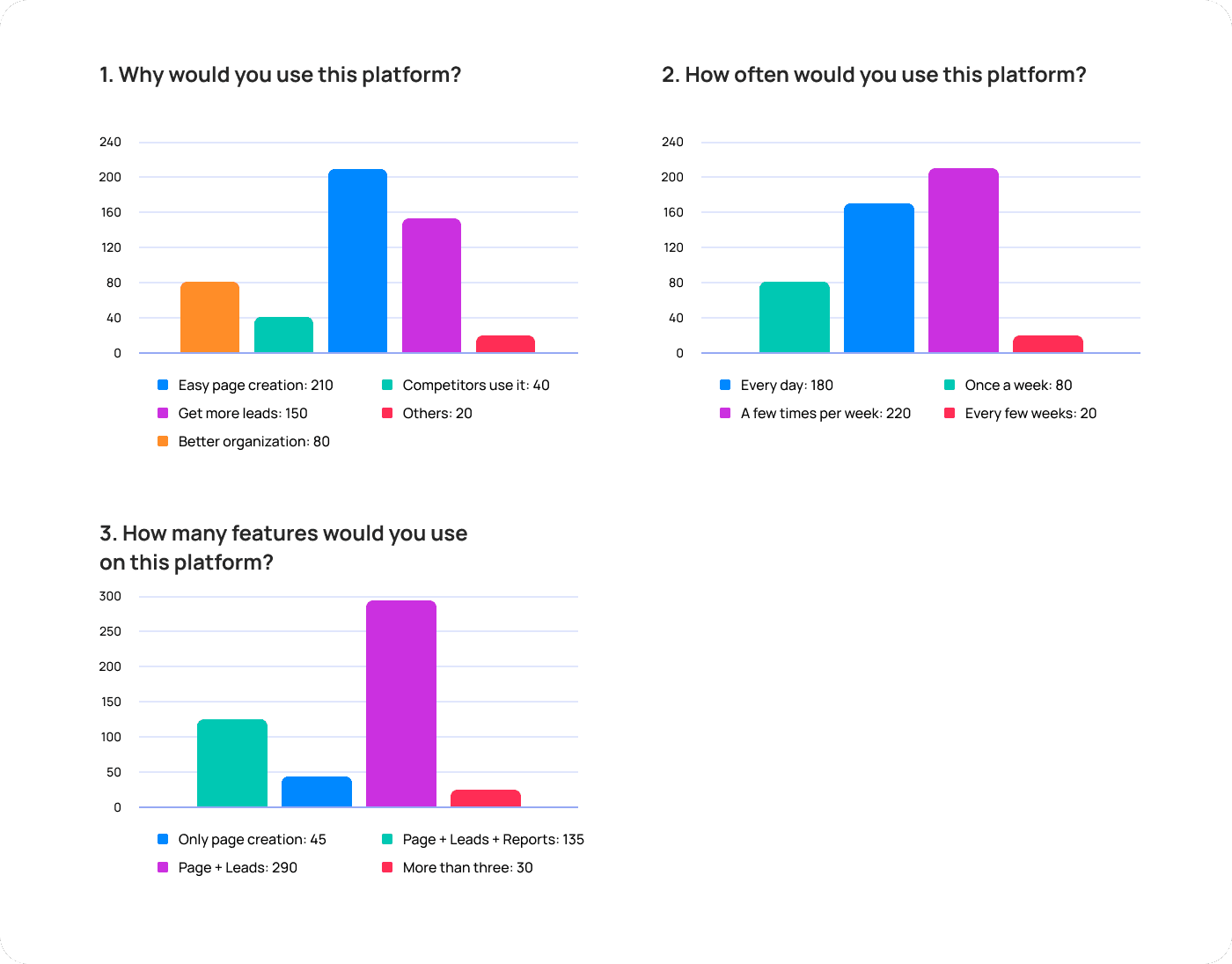
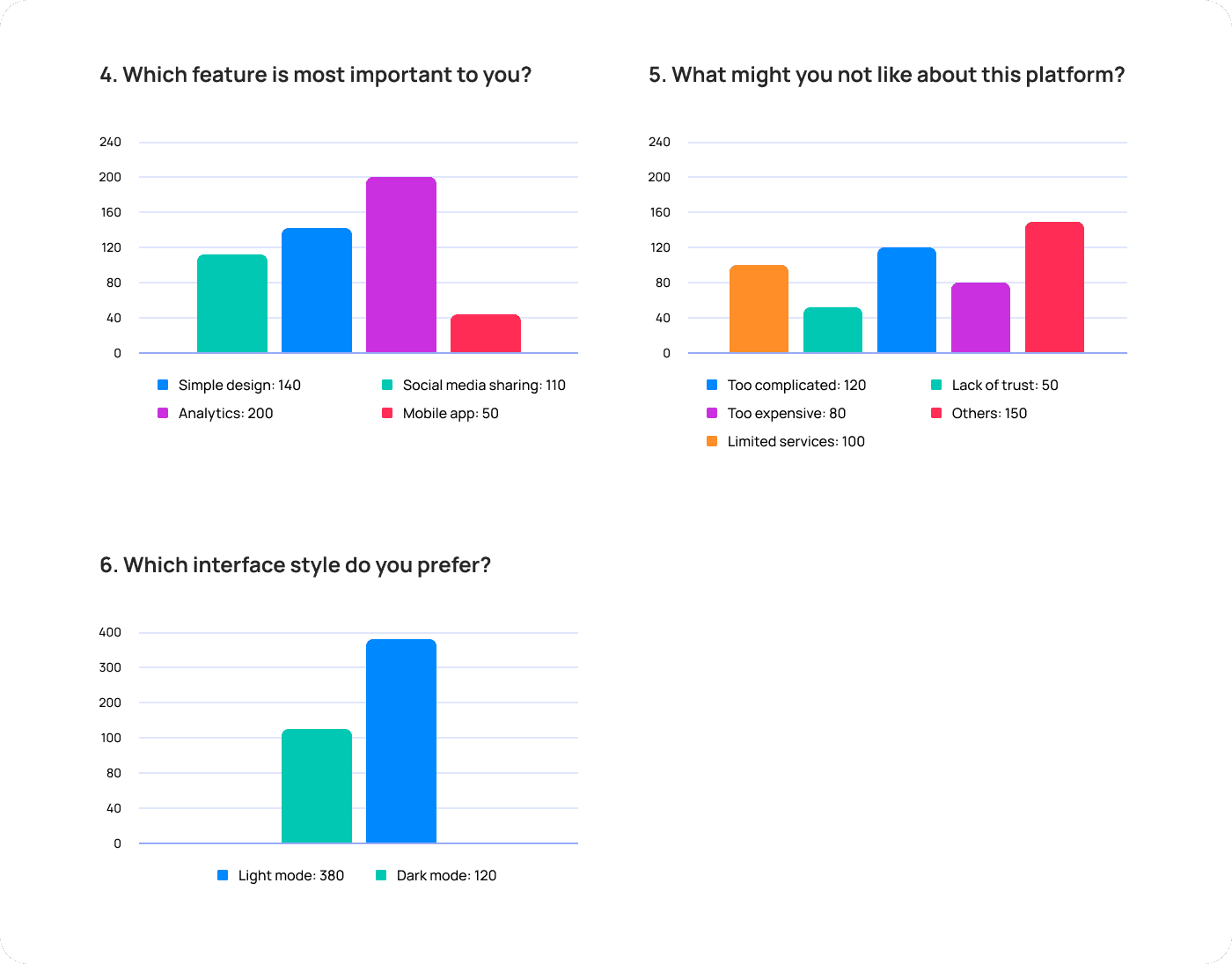
Online Questionnaire
The core objective of this Survey was to identify the pain points and concerns of our target users in the real estate sector as they transition their workflow to an online platform.
Survey Overview
Platform Used: Google Form
Purpose: To uncover user needs, behavioral patterns, and opportunities for enhancing the LeadPack.
Sample Size: 86 participants
Given that professionals in the real estate sector (Realtors) are not inherently technical people, their main concerns revolve around the lack of technical skills, the shortage of time, and a deficiency in digital marketing expertise. Consequently, there is a critical need for another individual or system to manage these non-specialized areas for them, allowing them to focus entirely on their core business of property transactions.
Methodology
1. Survey Design
We meticulously designed the questionnaire to gather a full spectrum of data, including both quantitative and qualitative insights, on user experiences, preferences, and behaviors, ensuring detailed and comprehensive feedback.
2. Data Collection
We distributed the questionnaire through various communication channels and the social media platforms at our disposal to obtain more comprehensive feedback from individuals active in this field.
3. Response Analysis
The responses were collected to align our design process with the needs of our target audience, identify existing gaps in this field, and ultimately ensure a better and more complete platform design.
Key Findings
User Preferences
One of our goals was to gain user insight into their business preferences, specifically identifying what items or actions they prioritize.
Behavioral Patterns
Gaining critical insight into user interaction patterns, specifically detailing their most frequently executed tasks and identifying friction points to streamline the application workflow.
Desires for Improvement
Feedback on features users find lacking and suggestions for enhancements that could improve their overall experience.
User Interview Summary
Purpose
To gain a deep understanding of how real estate agents in Portugal manage their leads, listings, and communication with clients, we conducted exploratory interviews with potential users.
The goal was to identify key pain points, workflow gaps, and expectations that could guide the design of a user-friendly and business-oriented lead management platform.
Objectives
1. Understand Agent Pain Points
Identify the main frustrations agents face when managing property listings, tracking leads, and communicating with clients.
2. Analyze User Workflows and Behavior
Observe how agents currently handle digital tools (if any) and how comfortable they are with technology.
3. Define Needs and Desired Features
Gather qualitative feedback to understand which features are most valuable to agents (e.g., lead tracking, reporting, automation).
4. Evaluate Technology Readiness
Assess participants’ familiarity with online platforms and their openness to adopting new digital tools.
Methodology
1. In-Person & Remote Interviews
• Participants
10 real estate professionals (6 agents, 3 brokers, 1 agency owner) from Lisbon, Porto, and Faro.
• Duration
15-30 minutes per session.
• Format
Semi-structured interviews were conducted in Portuguese and English (depending on participant preference).
• Setting
Interviews were held both in person (for Lisbon-based agents) and remotely via Zoom and Google Meet.
2. Discussion Topics
• Daily lead management workflow
• Current tools and pain points
• Communication with clients and agencies
• Expectations for a digital lead platform
• Desired features and usability preferences
3. Supplementary Method
Participants were shown low-fidelity wireframes (sketches) of a possible lead management dashboard to trigger feedback and understand expectations before development.
Key Insights
1. Pain Points
• Fragmented lead tracking
Most agents still rely on Excel files or WhatsApp to manage leads, making it hard to track conversions.
• Time-consuming updates
Many agents manually update property info across multiple platforms (Idealista, Imovirtual, etc.).
• Lack of visibility
Agents struggle to monitor which leads are active or lost due to a centralized dashboard.
Low digital literacy: Some older agents expressed difficulty using advanced CRMs or “too technical” interfaces.
2. User Needs
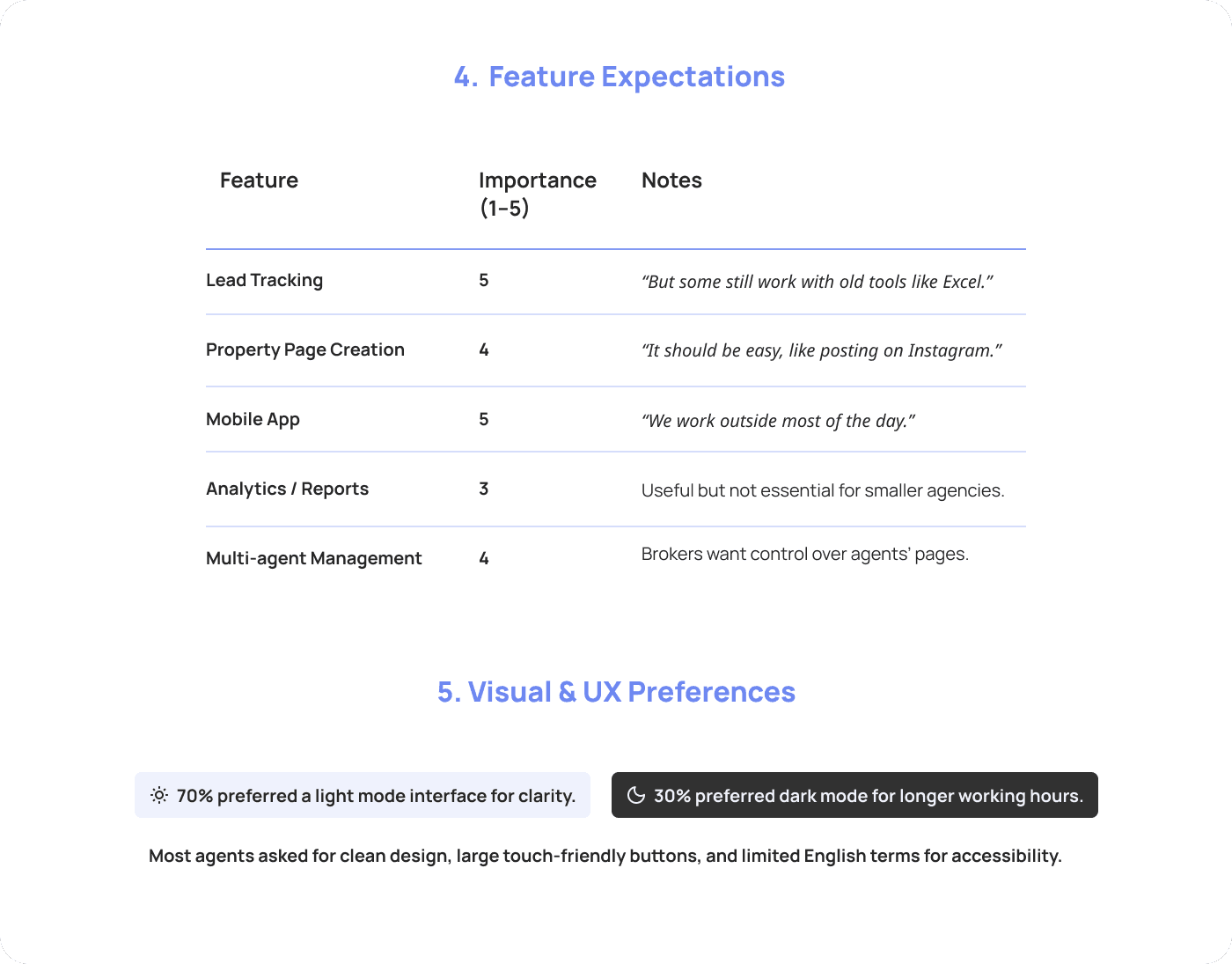
• Simple and visual dashboard
Users want a clear overview of leads, listings, and contact status.
• Mobile-first design
8 out of 10 participants said they prefer managing clients via their phones during visits or on the go.
• Notifications & reminders
Agents need quick reminders for follow-ups, property visits, or unanswered leads.
• Integration with WhatsApp or email
Seamless client communication was a top request.
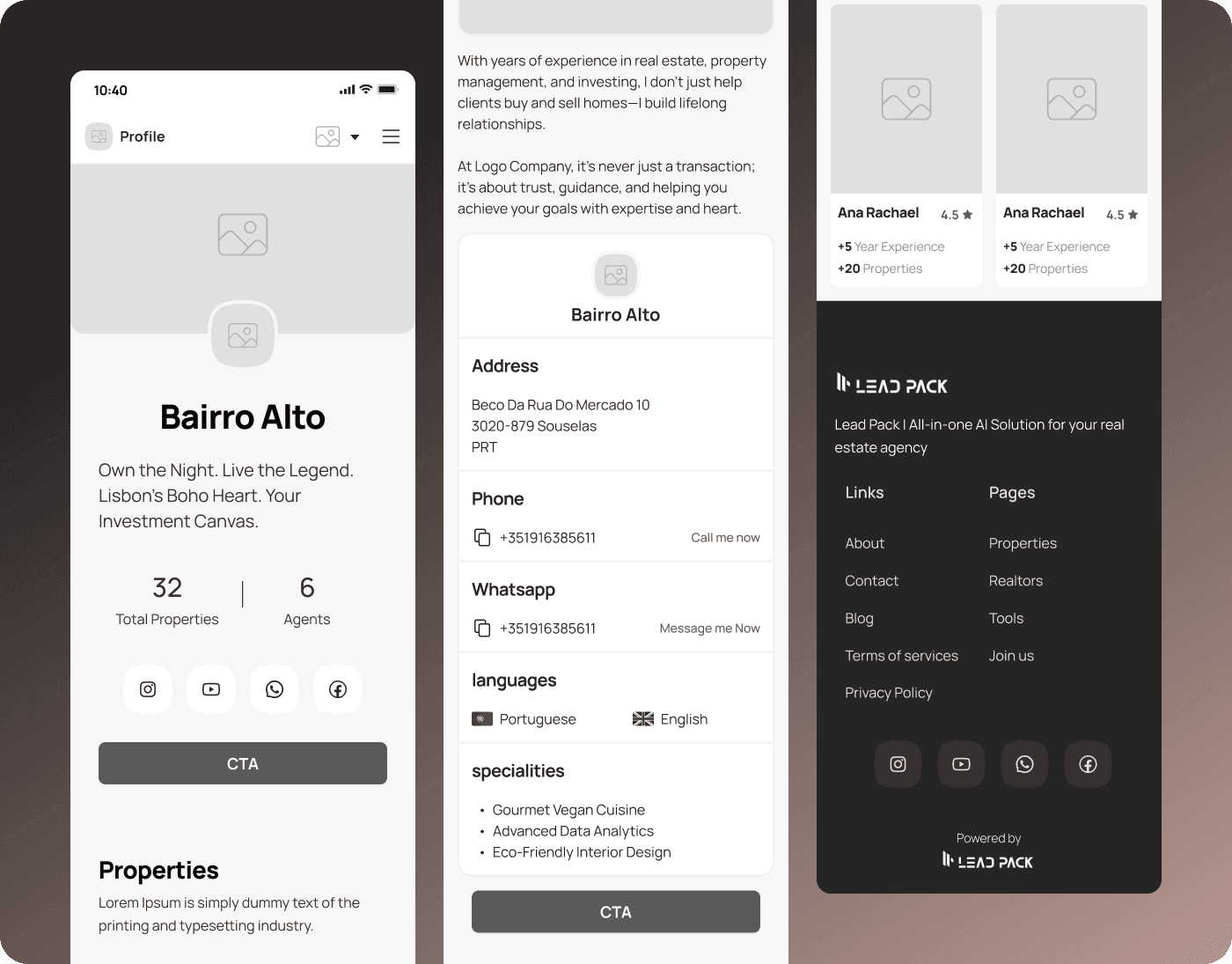
• Customizable profile pages
Agents want personal branded pages showing their listings and contact info.
3. Behavioral Insights
• Tech comfort levels
60% feel comfortable using tools like Canva or Google Sheets.
40% said they prefer minimal interfaces with large buttons and clear text.
• Adoption barrier
Agents are open to trying new tools only if they save time or increase lead visibility.
• Motivation drivers
- Quick lead response time
- Easier collaboration with brokers
- Ability to see performance analytics
Key Insights
• The main opportunity lies in simplifying digital lead management for agents who are not tech-savvy.
• A mobile-first, easy-to-use interface with integrated communication tools will drive adoption.
• Trust and transparency are essential: showing how data is stored and leads are tracked builds confidence.
• Adding guided onboarding and localized support in Portuguese will reduce friction during setup.
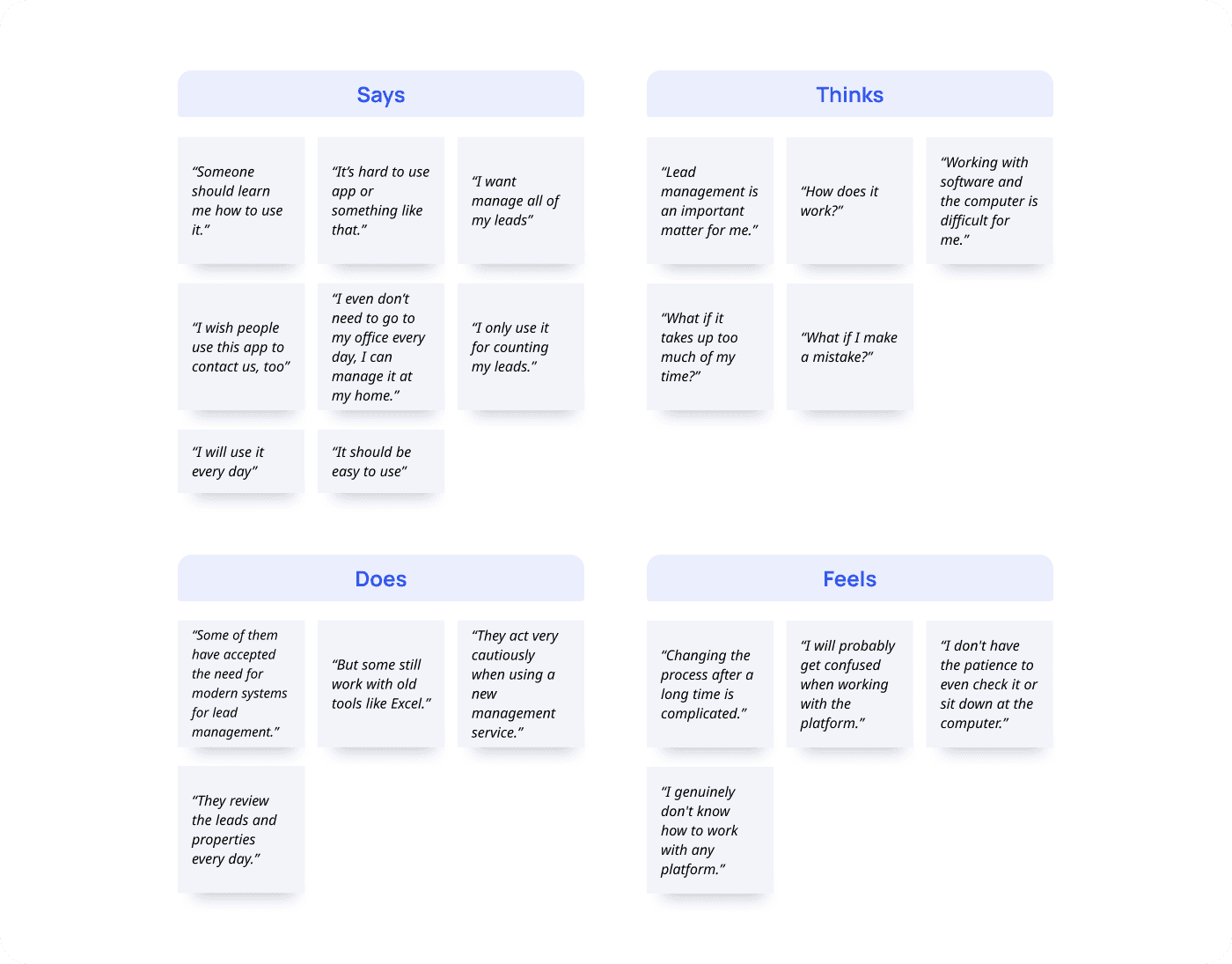
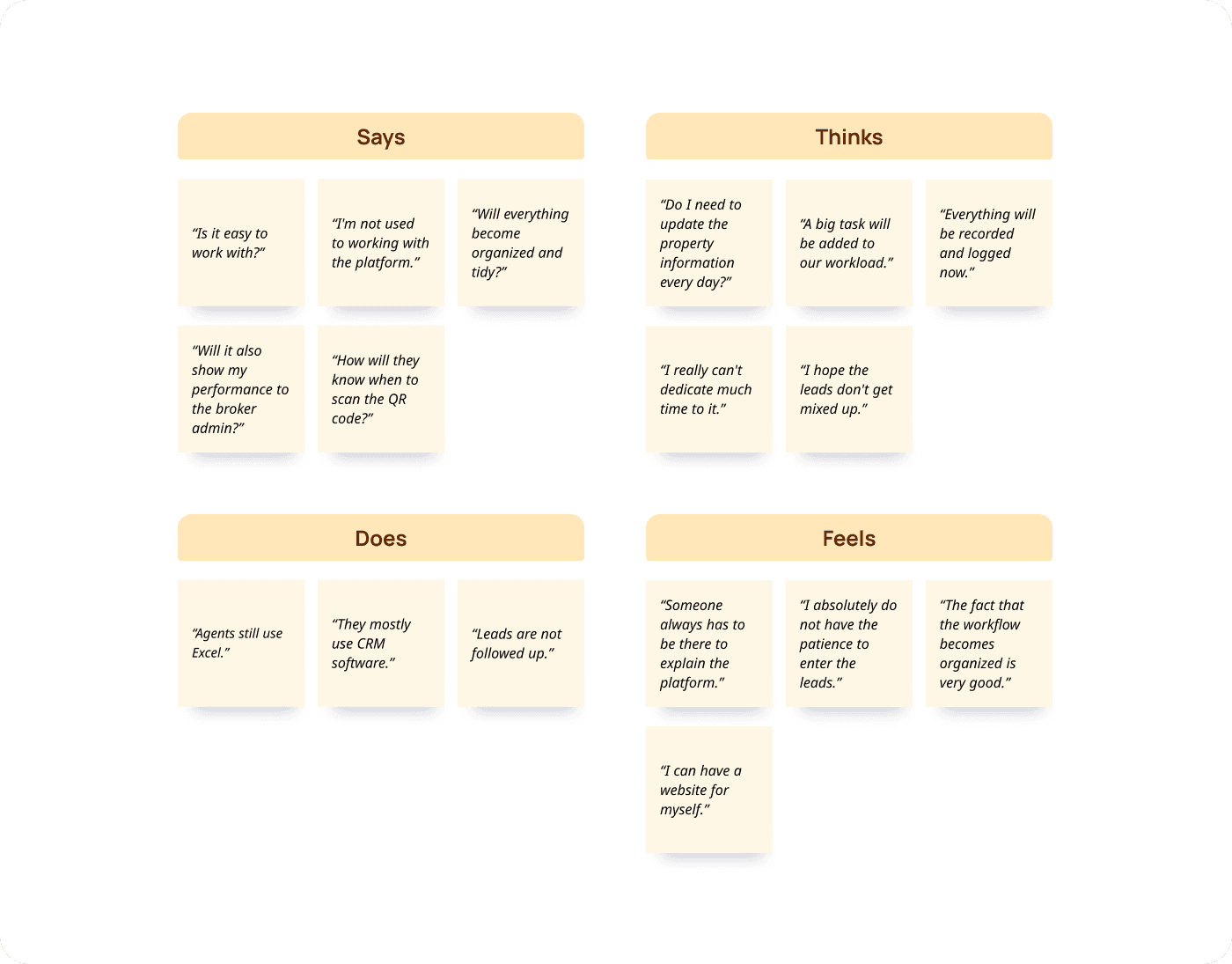
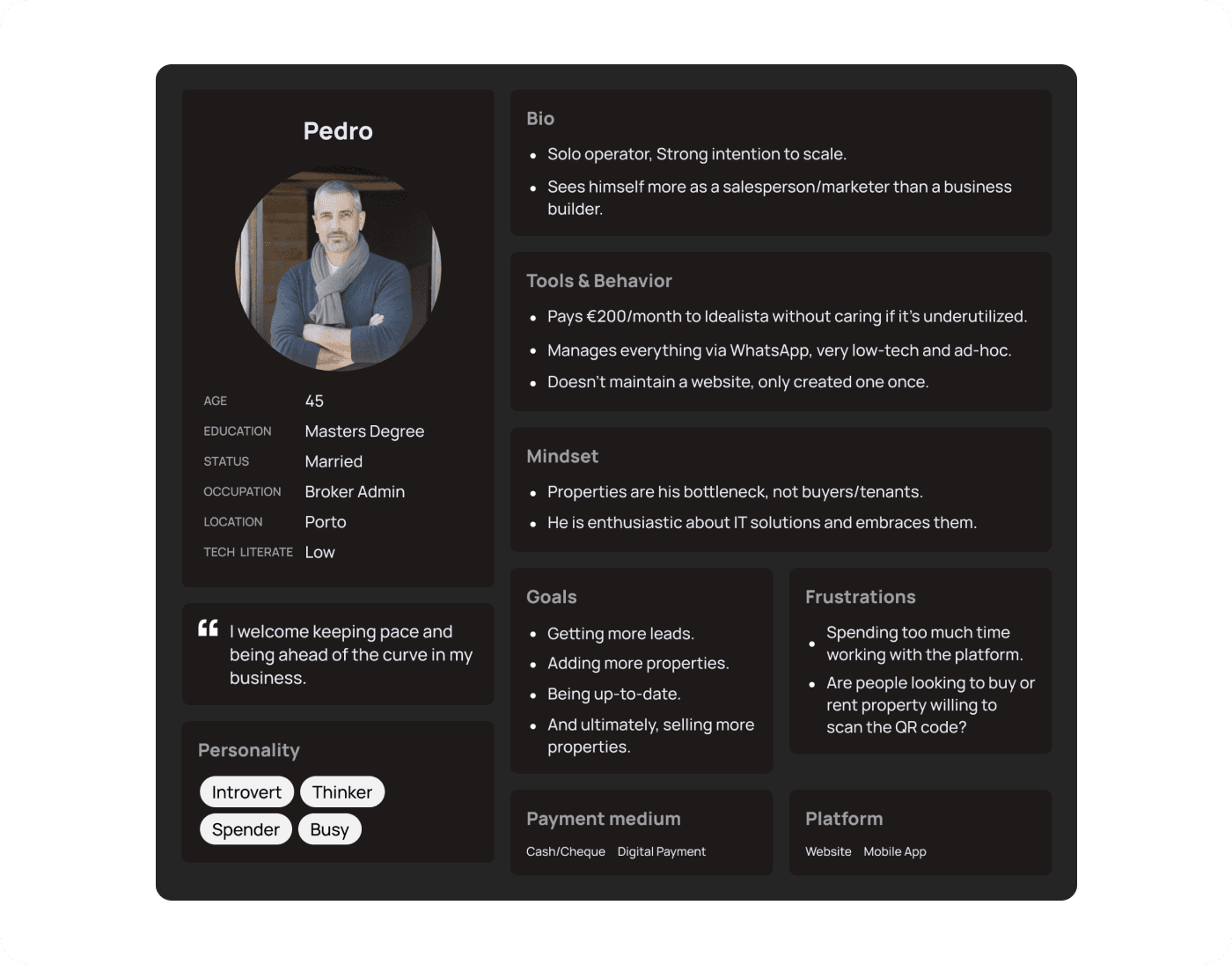
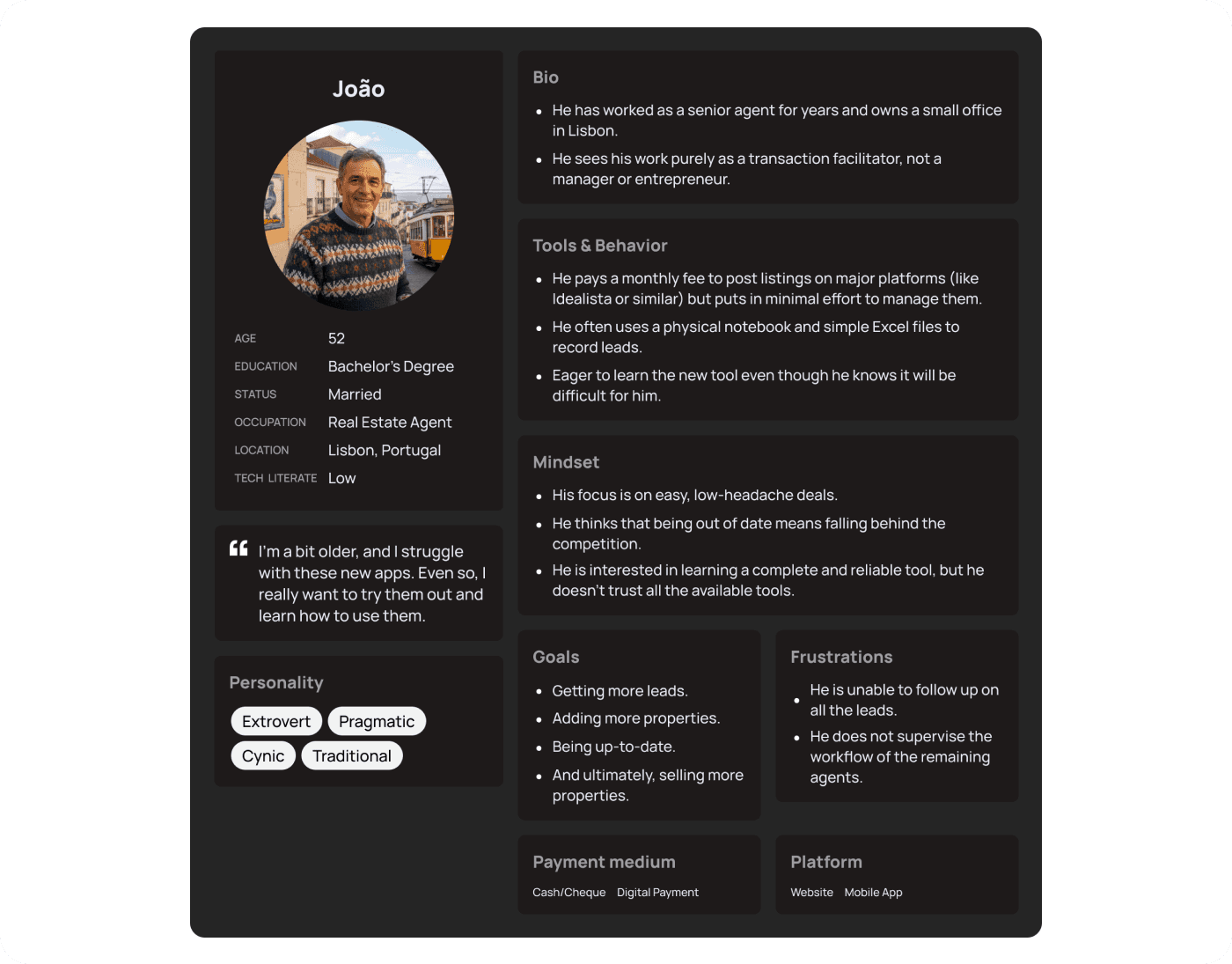
User Needs
1. Lead and Property Management
- Precise lead management, including the ability to categorize leads and follow up with them in various situations, tailored to each lead's specific condition.
- Management of and detailed awareness regarding all specifications of both available and sold properties.
2. Creation of a Unique Page with Customization Capability
- Creation of a unique page that is built according to specific needs and desired information.
- The ability for the admin to update the page and accurately update the information.
3. Ease of Use of the Platform (Usability)
- Given the platform's novelty, the need for ease of use (user-friendliness) is strongly felt.
- Simple design, clear and well-defined functionality (user interface), and the creation of straightforward user journeys (user paths).
Business Goals
1. Positioning this platform as the largest Real Estate Lead Management Solutions Platform in Portugal
The gap for this all-in-one platform in Portugal is evident, and there is the potential for it to become the first and largest platform of its kind.
2. Increasing the number of leads and providing the ability to follow up on them
- This is the primary goal for establishing this platform for professionals working in this field.
- The platform will provide this capability and fill this void, leading to more property sales and rentals.
3. Creating a management system for monitoring agents, leads, and properties
Creating this system will give us a significant edge over competitors active in this sector.
4. Flexible design to allow for platform growth
Focusing on creating a foundation for future growth is an important consideration in the platform's design.
5. Modern design and ease of use (User-friendliness)
The design being up-to-date while also being easy to use will make the work easier and more enjoyable for our target audience.
Key Features
1. Admin Panel
Create an admin panel for three levels of access: Super Admin, Broker Admin, and Agent. (The panel for the regular user or buyer will be implemented in the future.)
2. Password and Security
The security of login/logout and access to the admin panel is highly important.
3. Filter Function
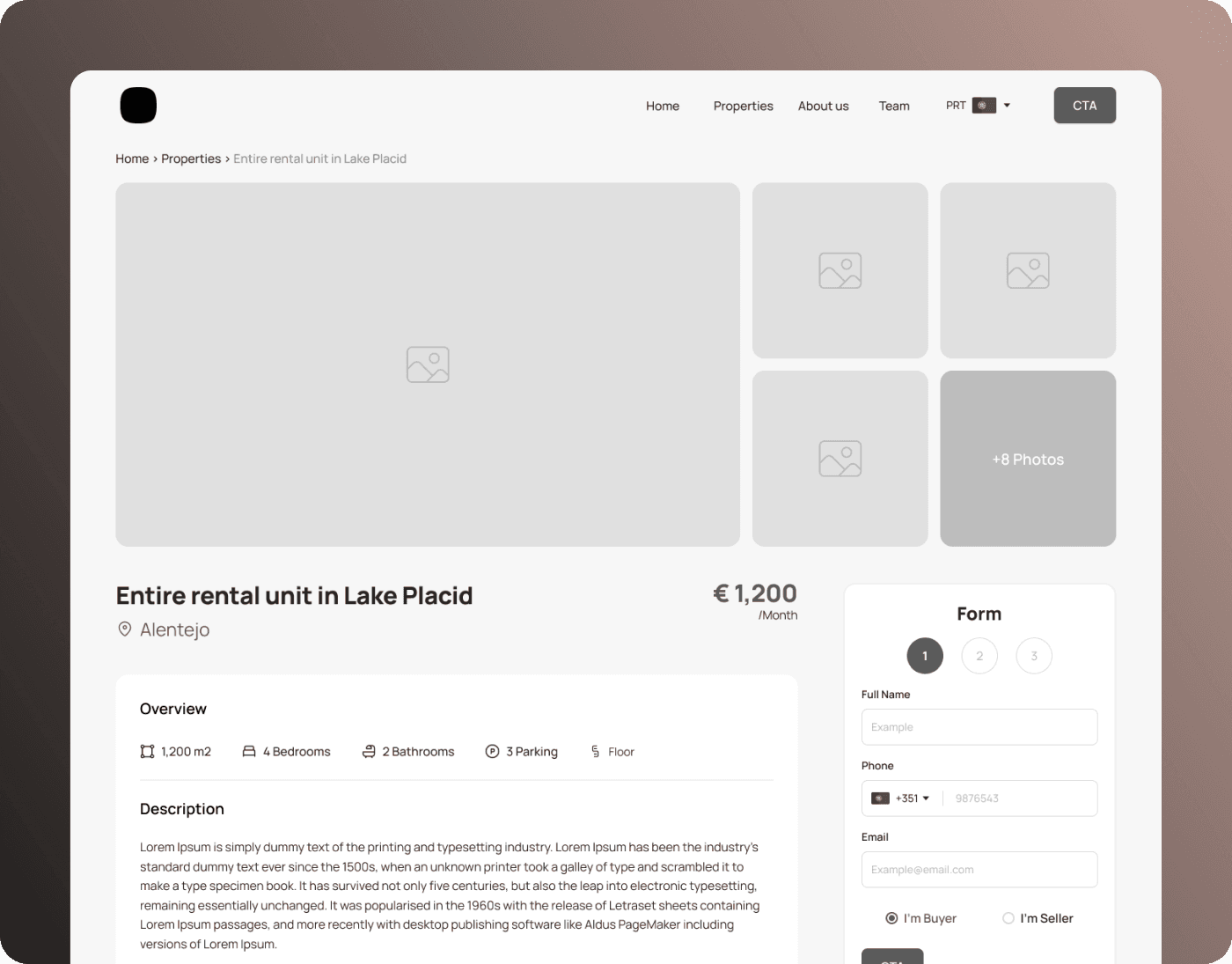
The ability to filter properties using multiple specifications to find the desired property faster.
4. Page Customization
The ability for a user to customize their own page by uploading their preferred visual and textual content.
5. Modern but Simple UI Design
A modern yet simple design for the pages that is suitable for all individuals.
Wireframing: Low Fidelity
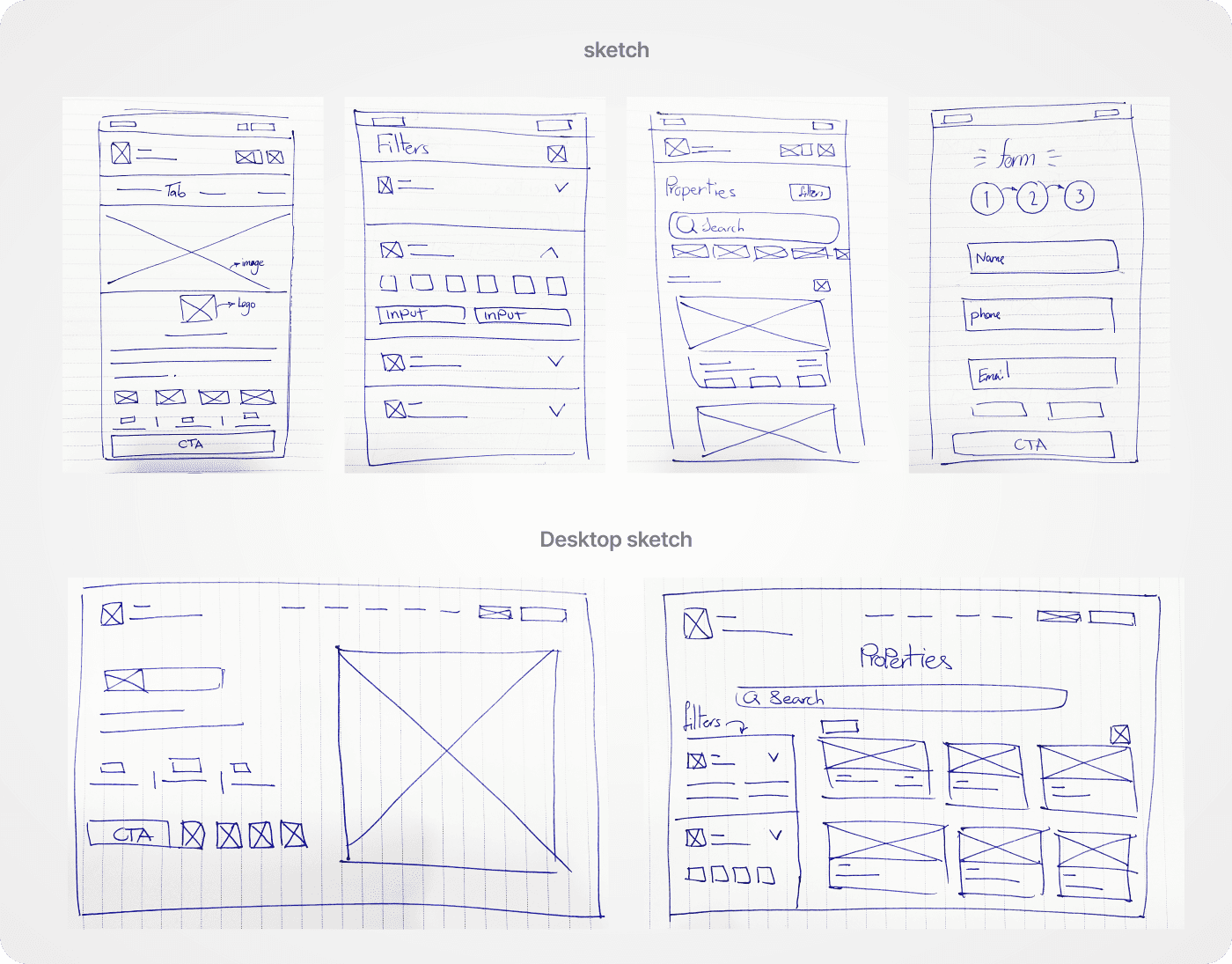
For the LeadPack application's core functionality and user experience, we executed an iterative, low-fidelity prototyping phase. This ensured that the foundational architecture was robust and aligned with the critical needs of real estate professionals and their clients. The process was strategically involved:
1. Conceptual Outlines & Workflow Mapping
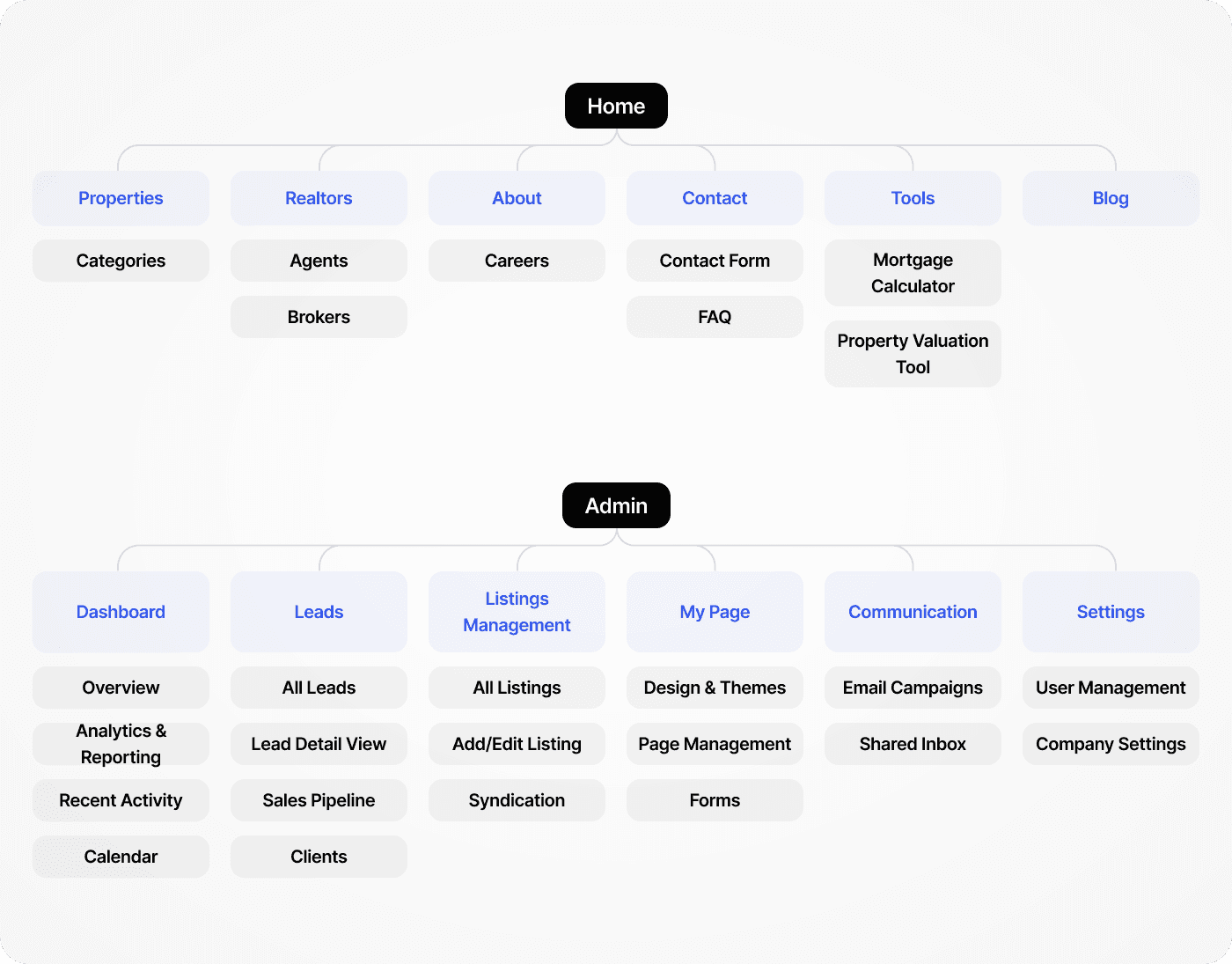
Initial hand-drawn sketches and digital outlines were generated to visualize the layout and critical workflows. These "Rough Sketches" focused on the placement of essential agent tools, such as the Dashboards, Property Listing Management, and Client Communication Hub, establishing the structural skeleton of the application.
2. Real Estate-Centric Information Architecture (IA)
The prototype incorporated a precise Information Architecture designed around the real estate transaction lifecycle. We prioritized logical categorization and organization of services, ensuring users could effortlessly access core functionalities.
This focus guarantees a streamlined, intuitive structure for busy agents.
3. Minimalist Visual Framework
We utilized simple, placeholder design elements to represent screen layouts, deliberately avoiding detailed aesthetics. These basic visuals were crucial for testing functionality over form, allowing us to clearly understand how agents and clients would navigate critical pathways, like listing a property or scheduling a showing.
4. Simulated Agent & Client Flows
The low-fidelity wireframe introduced core interactivity, simulating essential user flows:
Agent Flow: Navigating between lead statuses, updating property details, and setting automated follow-ups.
Broker Admin Flow: Saving favorite properties, viewing agent communication, and booking virtual tours. This enabled early identification of friction points in key tasks.
5. Stakeholder Validation & Iterative Refinement
The prototype was shared with key stakeholders, including active real estate agents and brokerage partners, to gather targeted feedback. This iterative validation process was fundamental in adjusting the wireframe to meet real-world agent demands and business goals, ensuring LeadPack delivers maximum efficiency before moving to high-fidelity design.